


1300°C: The Threshold of Vitrification
In the vocabulary of ceramics, 1300°C is more than a thermal measurement; it is the physical threshold where clay ceases to be earth and begins its transformation into stone. This entry provides a technical examination of Vitrification – the process of turning a porous silicate material into a glass-like, non-permeable solid. At this peak temperature, the internal structure of the Kaolin clay collapses, fusing the body and glaze into a singular, inseparable entity.
The Mechanism of Vitrification
The journey to 1300°C is an exercise in molecular reorganization. As the kiln ascends, the raw quartz and feldspar within the clay body begin to melt, filling the microscopic voids between alumina and silica particles. At the peak heat, the vessel reaches a state of near-liquid tension. This is the moment of maximum density: the pores vanish, and the body becomes “vitrified” – impervious to water, resistant to thermal shock, and resonant like a bell when struck. This structural integrity is the silent prerequisite for a vessel that serves for a lifetime.
The Eight-Hour Reduction Cycle
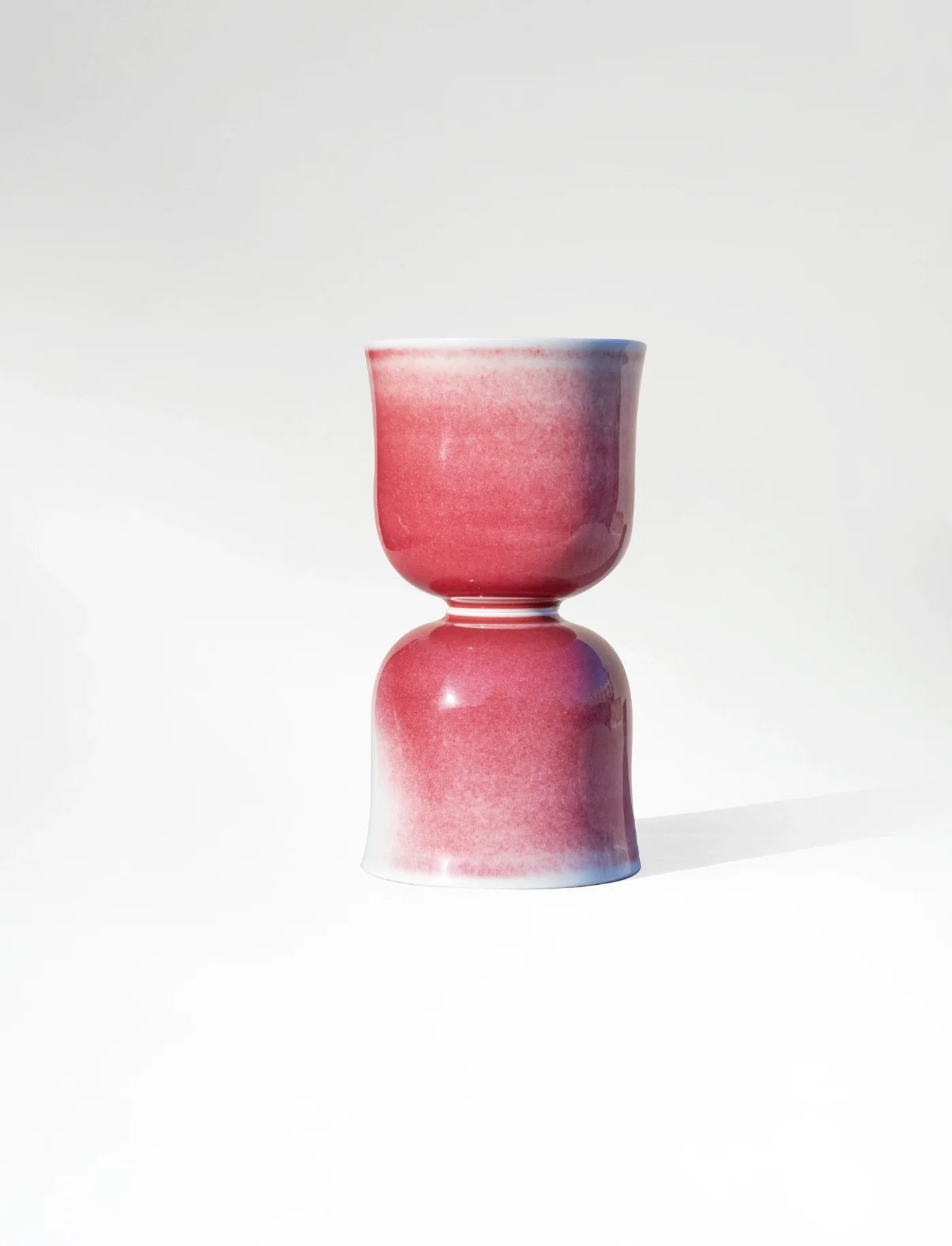
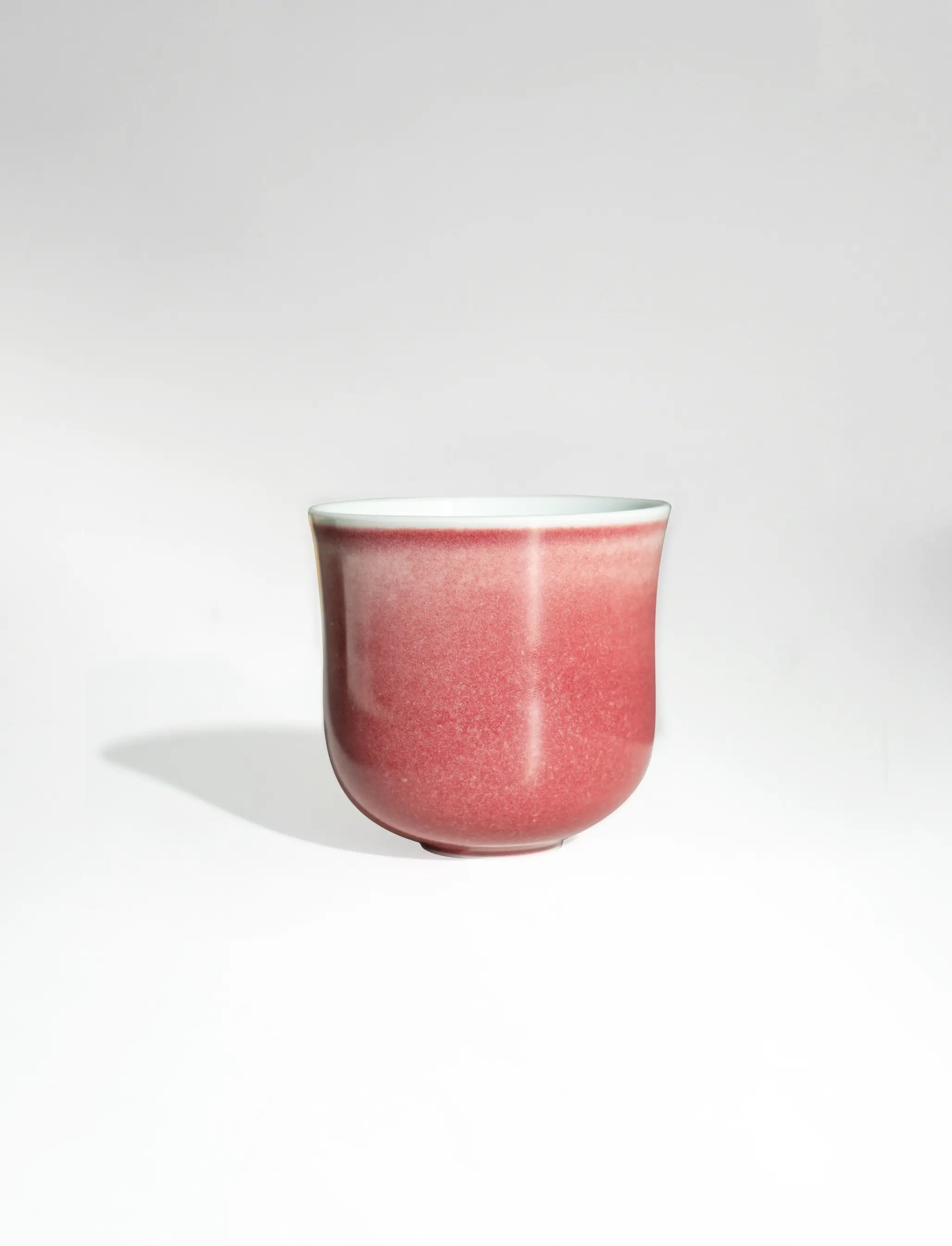
While industrial kilns rely on automated oxidation to produce uniform results, SaraGaia utilizes a traditional Reduction Firing method. This process requires an eight-hour monitoring cycle of manual adjustment. By restricting the kiln’s dampers, our artisans starve the atmosphere of oxygen, creating a state of “atmospheric debt.” In its desperation for oxygen, the fire “steals” atoms from the mineral oxides within the glaze. It is this chemical theft that induces the dramatic color shifts – the transition of a dull mineral into a deep, saturated crimson or an iridescent blue.
The “Hare’s Pelage” and Calculated Instability
This oxygen-starved environment creates the conditions for the “Hare’s Pelage” phenomenon – a manifestation of fluid dynamics. As the minerals melt, they migrate through the glaze like cooling magma. Heavier iron particles sink and drift, forming fine, vertical streaks that mimic the delicate pelage of a hare. This texture is a signature of high-fire reduction, a result of gravity and chemical volatility that cannot be replicated by the sterile, consistent heat of an electric kiln.
The Final Decision
We refer to our craft as Calculated Instability. We select the minerals, refine the clay, and modulate the dampers with an engineer’s precision, but at 1300°C, the outcome is ultimately ceded to the flame. We do not dictate the final aesthetic; we facilitate the conditions for beauty to manifest. The resulting vessel is a permanent record of that interaction – a piece of the earth that has survived the violence of the kiln to emerge as a stable, silent witness to your daily rituals.
Read more

“Soil and Spirit: The 1,000-Year Lineage of the Porcelain Capital” SaraGaia’s studio is not merely located in Jingdezhen; it is rooted in its specific geology. This entry explores the unique compo...
In our studio, design is never an act of mere invention; it is an exercise in profound observation. We believe that the most enduring silhouettes and complex glaze profiles are already written in t...


