

The Alchemy of Fire: A Scholarly Evolution of High-Temperature Ceramic Firing
The Alchemy of Fire: A Scholarly Evolution of High-Temperature Ceramic Firing
In the study of ceramic history, the transition from earthenware to translucent porcelain is fundamentally a narrative of pyrotechnological mastery. Ceramic vitrification relies on the precise manipulation of thermodynamics within the kiln. At SaraGaia studio, we look at high-temperature firing not merely as a production stage, but as a deep alchemical evolution where raw earth undergoes microstructural phase changes to become contemporary porcelain art. Understanding the scholarly evolution of this thermal threshold reveals the complex science behind every luxury vessel.
The Thermal Threshold: From Proto-Porcelain to 1,300°C
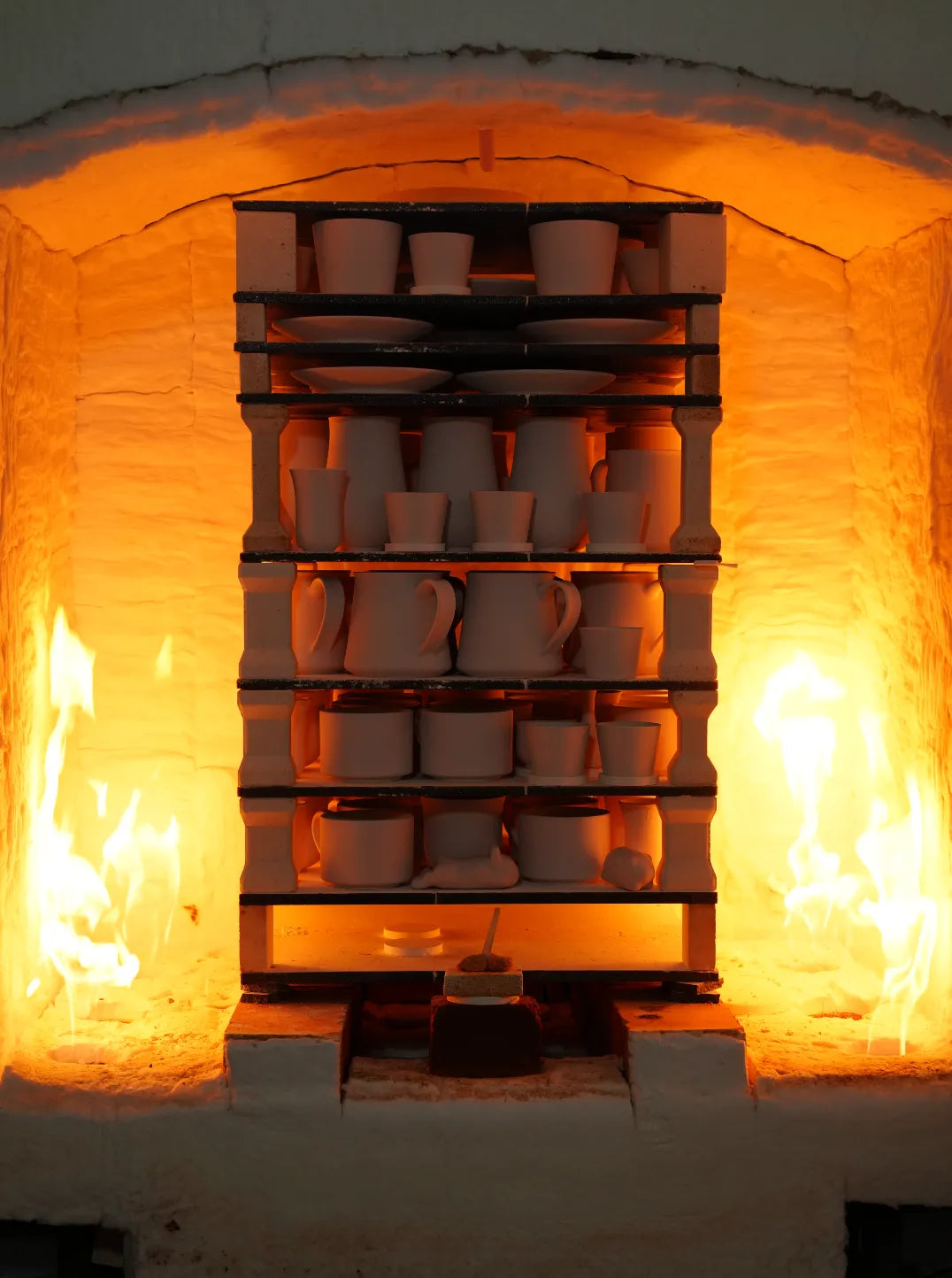
Early ceramic vessels, or proto-porcelain, were fired at lower temperatures between 800 and 1,000 degrees Celsius, resulting in porous, brittle structures. Academics note that the true breakthrough occurred during the Shang and Zhou dynasties, accelerating into the Song and Ming eras, as kiln designs evolved from simple pit kilns to advanced dragon kilns and mantou kilns.
This allowed potters to consistently breach the critical 1,200 to 1,300 degrees Celsius threshold. At this temperature, the high-kaolin clay bodies used in handcrafted luxury ceramic mugs undergo complete mullite crystal formation and quartz dissolution, achieving maximum density, zero porosity, and that distinct, resonant chime.
Atmospheric Control and Kiln Alchemy
The evolution of high-temperature firing involves not just intense heat, but the mastery of kiln atmospheres—specifically, the delicate interplay between oxidizing and reducing environments. Historically, the reduction firing technique, which limits oxygen inside the kiln, was essential for developing iconic historical glazes.
In the case of traditional glazes like Tea-Dust Green, first developed during the Tang Dynasty and refined in the Qing Dynasty, a reduction environment at 1,300 degrees Celsius forces iron oxides within the silicate matrix to precipitate into thousands of microscopic crystals. This complex pyrochemical transformation yields a signature matte, velvet-like texture that visually shifts under changing ambient light.
Bridging Material Science with Modern Rituals
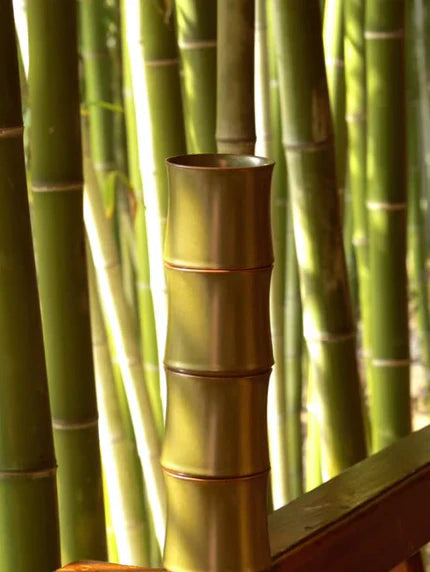
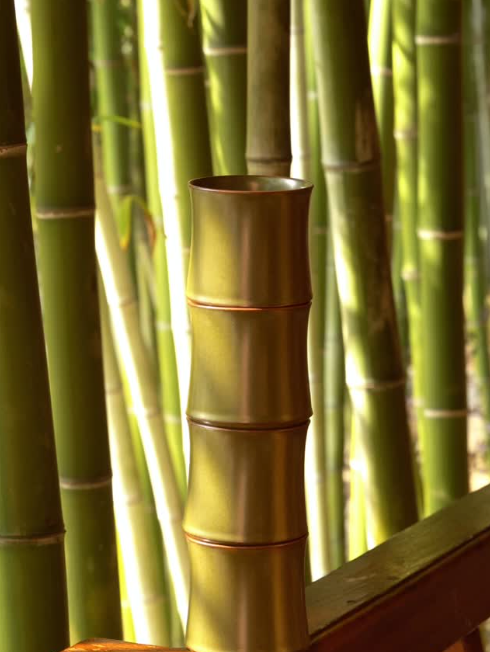
In contemporary ceramic design, maintaining this academic dedication to traditional thermal processes serves a larger aesthetic purpose. Our signature SaraGaia Bamboo Puzzle Mugs are not mass-produced through fast-fire industrial tunnels; instead, they honor the traditional 72-step process, culminating in prolonged, high-temperature kiln cycles.
This rigorous material science ensures that the structural form—inspired by the elegant lines of Eastern bamboo—retains its geometric integrity and exceptional structural strength. It bridges ancient material science with the sophisticated demands of modern daily rituals.
Conclusion: Art Formed in the Crucible of Time
The historical evolution of high-temperature firing teaches us that the finest vessels require absolute patience and rigorous structural precision. By integrating these historic thermal parameters with contemporary global design principles, SaraGaia studio guarantees that each creation is art when empty, life when full. We honor the centuries of scholars, kiln masters, and alchemists who mapped the behavior of fire, allowing us to bring a piece of living, highly-vitrified history directly onto your contemporary desk.
Share