


From clay to porcelain
Hands, time, and kiln fire shape each Jingdezhen piece. Every quiet step calls for keen, patient feel for the clay.
Handcrafting process
From clay in to kiln out, every step shapes the final form and glaze.
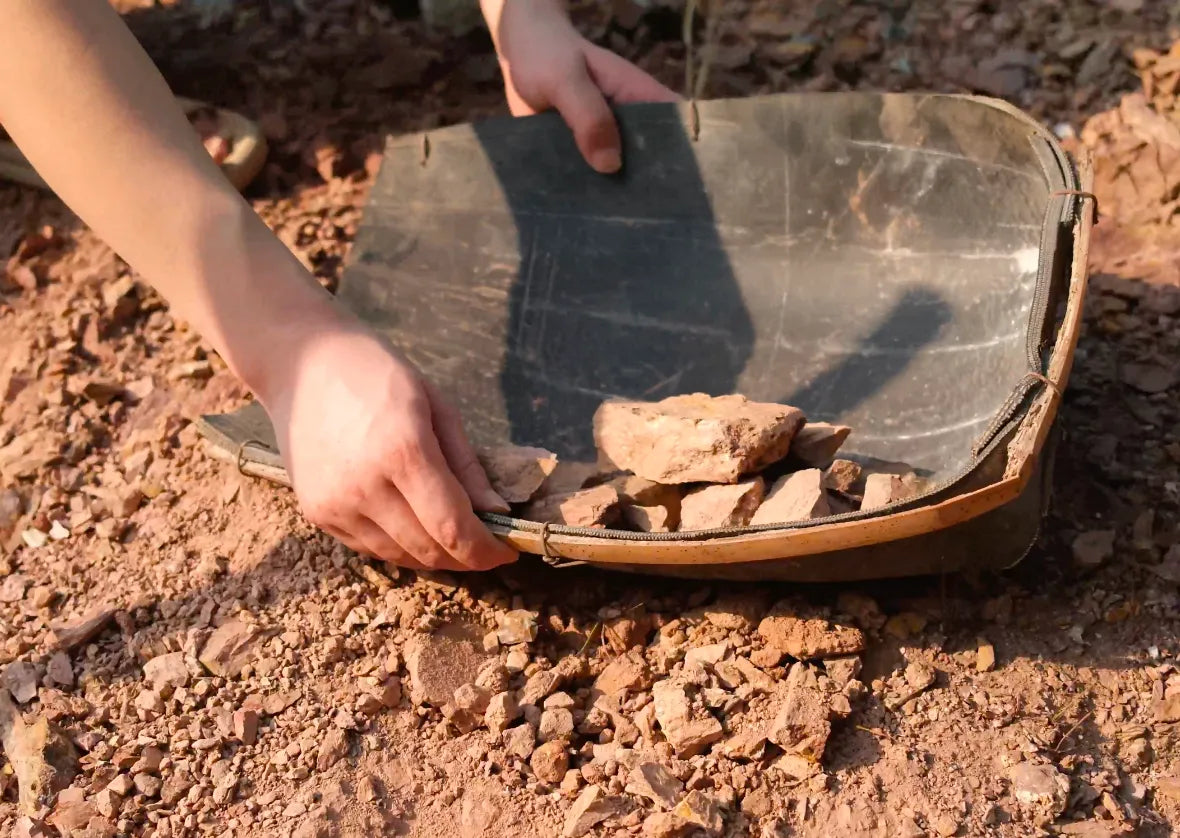
Clay preparation
Porcelain stone and kaolin—selected, crushed, washed, blended—become pure, fine clay. Its condition determines the stability of shaping and firing to come.
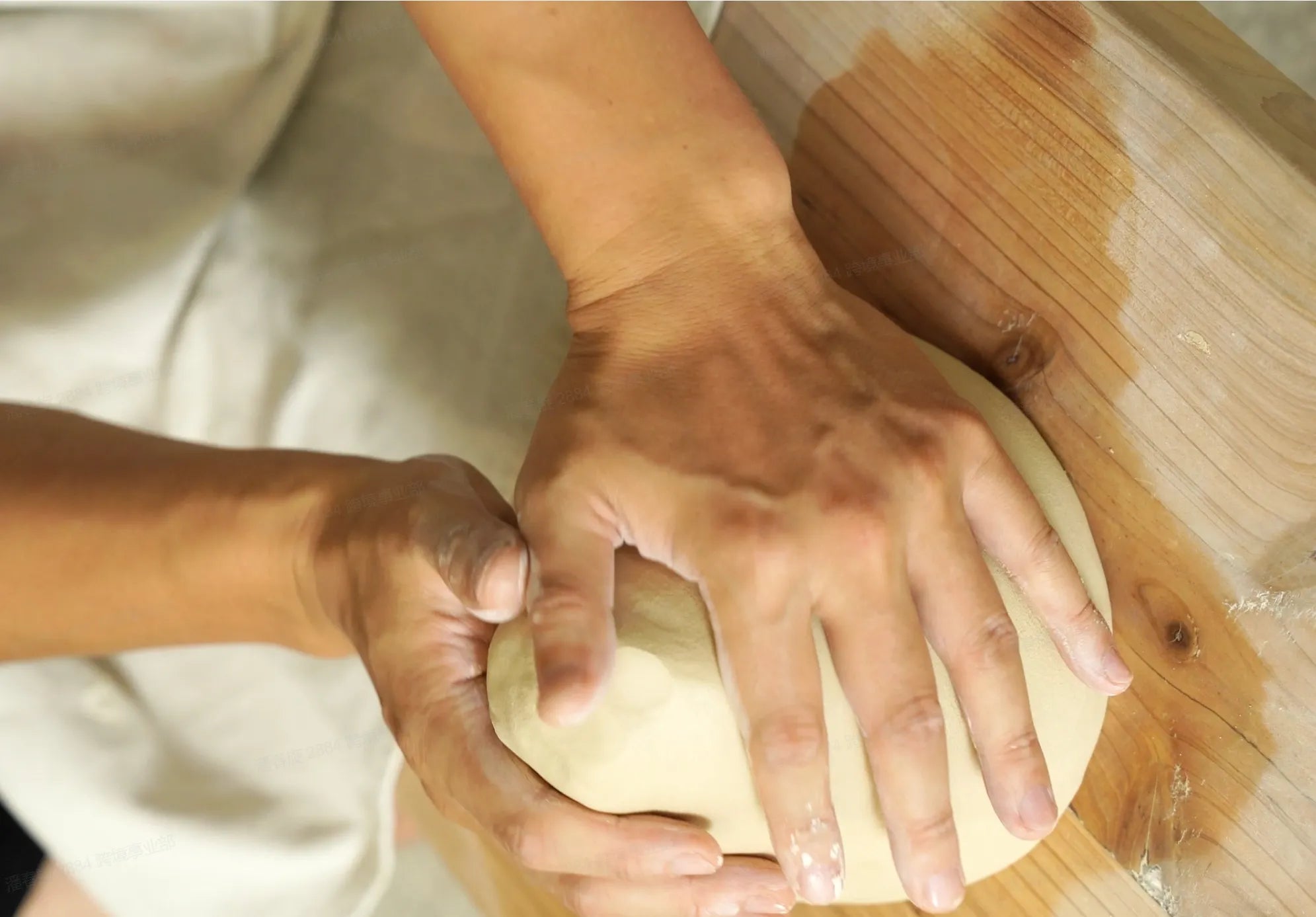
Wedging and kneading
Kneaded and pressed—moisture evened, air expelled. Stable clay, fewer cracks from throw to kiln.
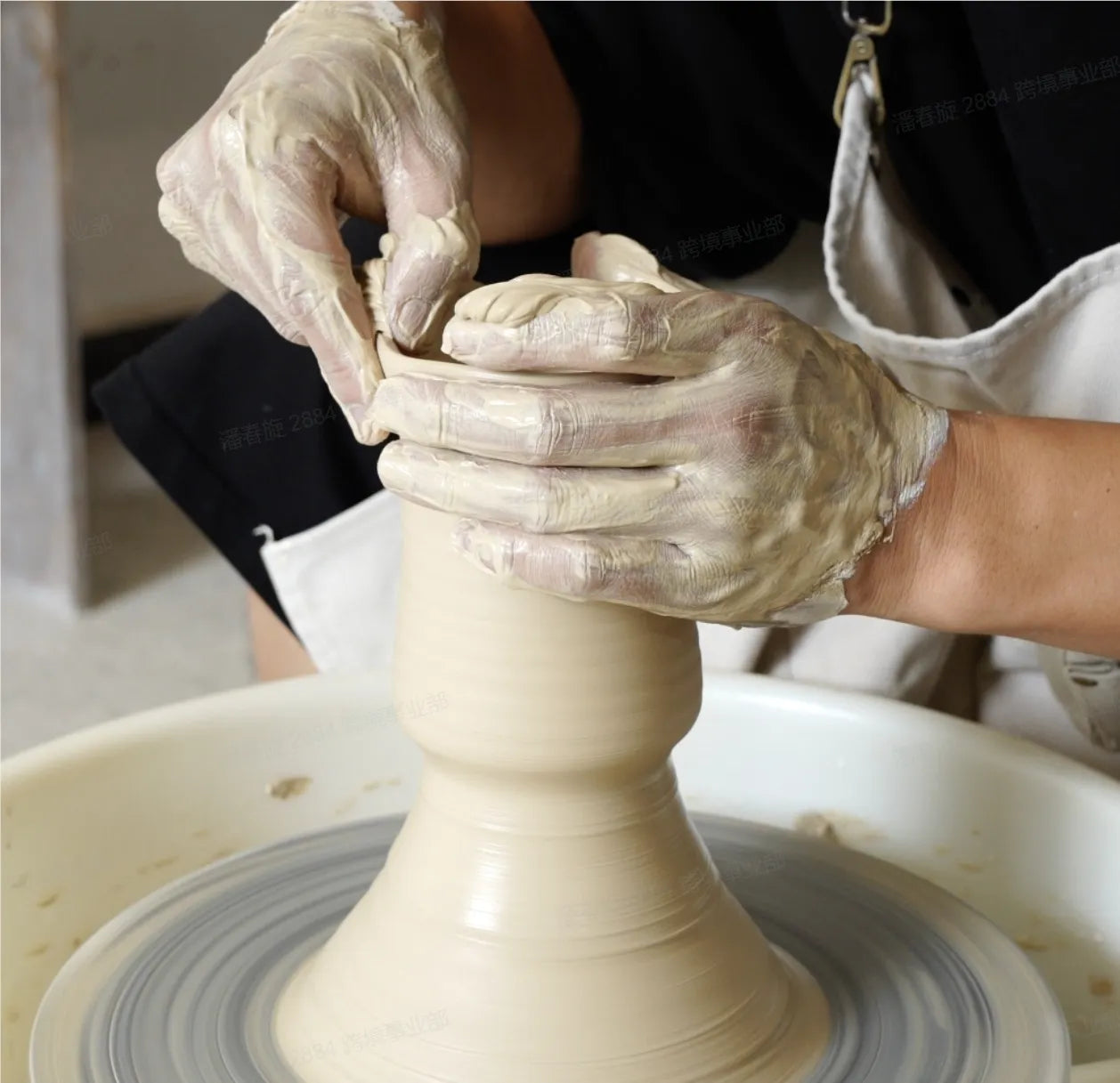
Throwing on the wheel
Clay centered on the wheel. Hands pull, lift, press, and narrow—slowly forming the vessel's silhouette.
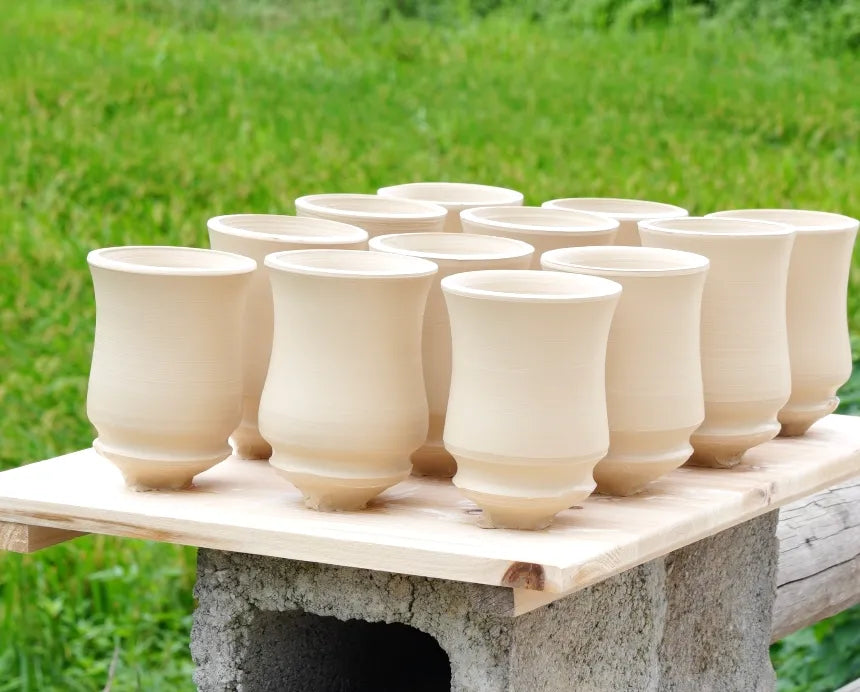
Air-drying
Wet pieces air-dry in a stable, ventilated space. When leather-hard, they return to the wheel for trimming. Too soft—they warp; too dry—they resist the blade. Getting the timing right is key.
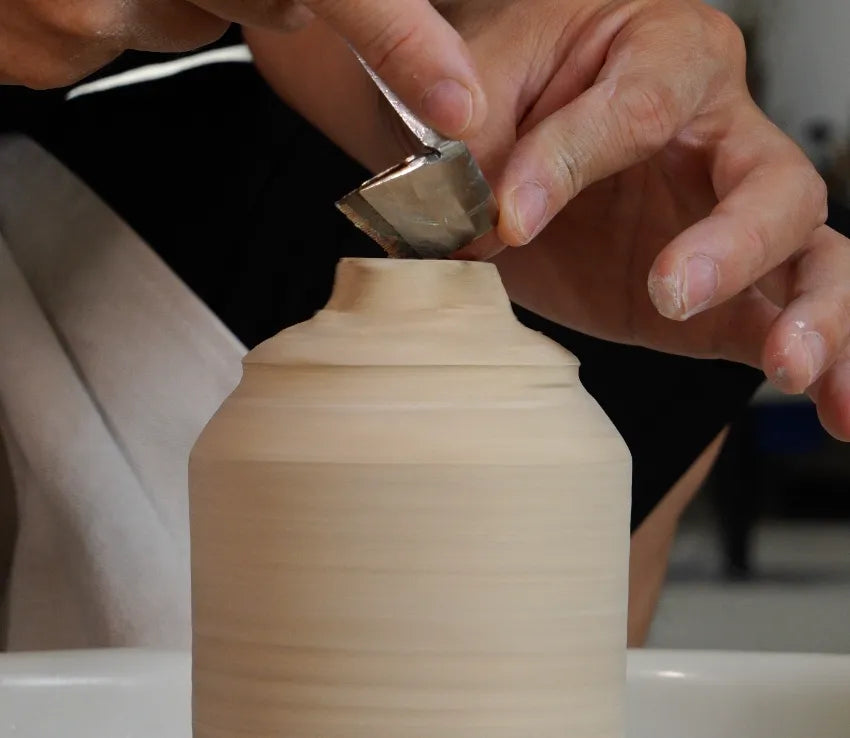
Trimming and foot finishing
Dried to the right firmness, the artisan trims away excess—refining wall thickness, rim curve, and foot shape.
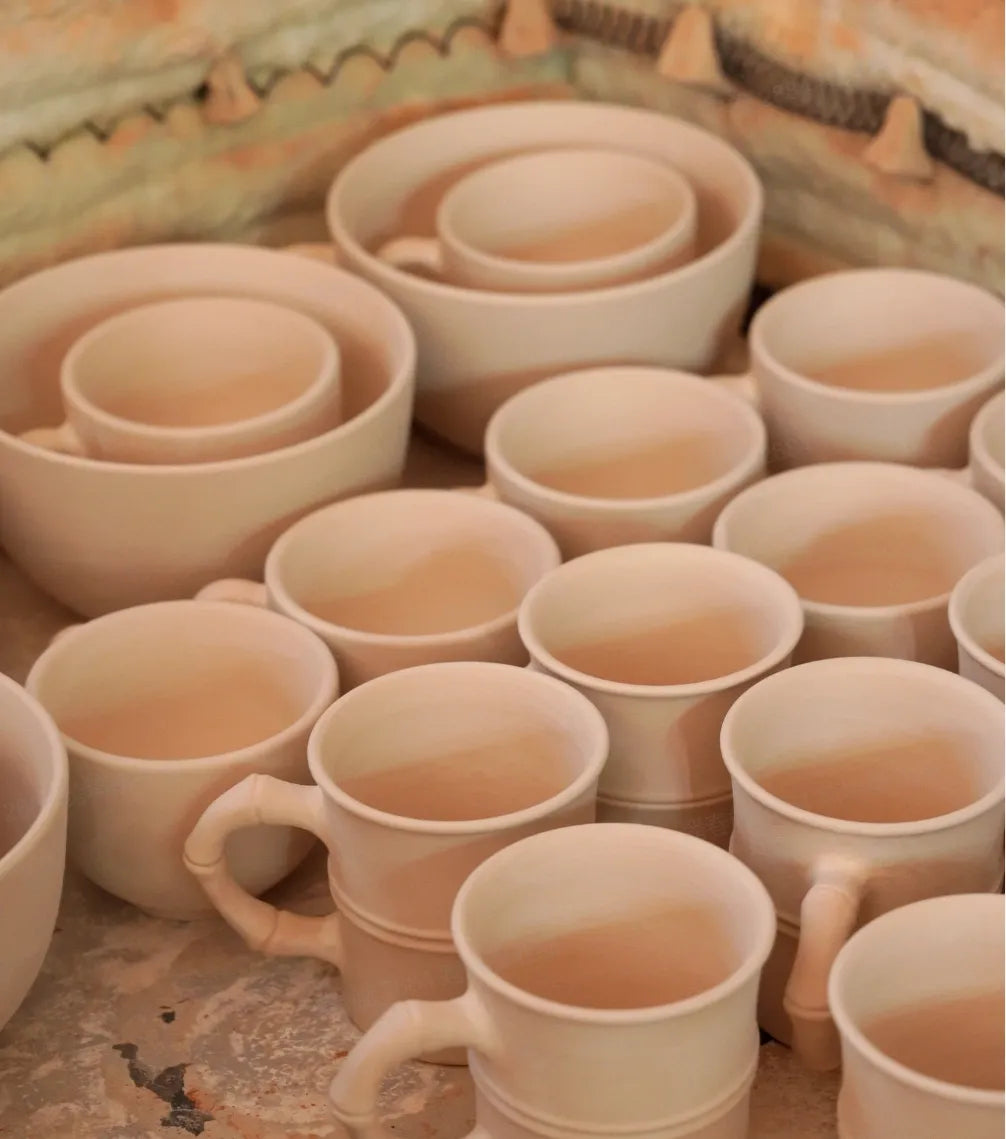
Biscuit firing
First firing—bisque at 800°C—drives out moisture, firms the body, and opens the surface for glaze. Cooled and checked, it moves on to dipping or spraying.
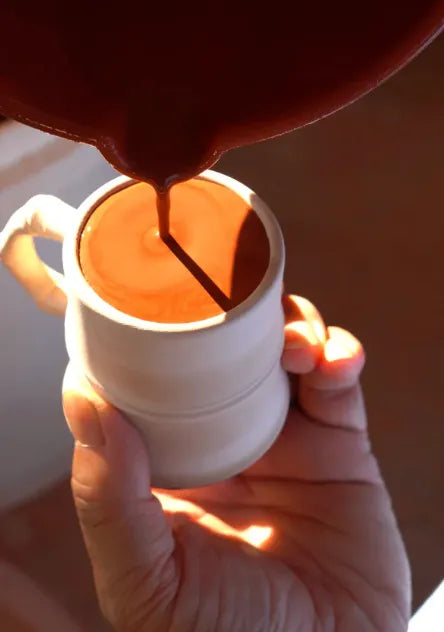
Glazing
Dipping or spraying—chosen by form and effect—coats the body evenly. Glaze consistency, method, and thickness decide the fired color, shine, and feel.

Glaze drying
Dipped or sprayed, then rested to dry. No touch, no drafts—just glaze bonding steady. Dry and checked? Into the final fire.
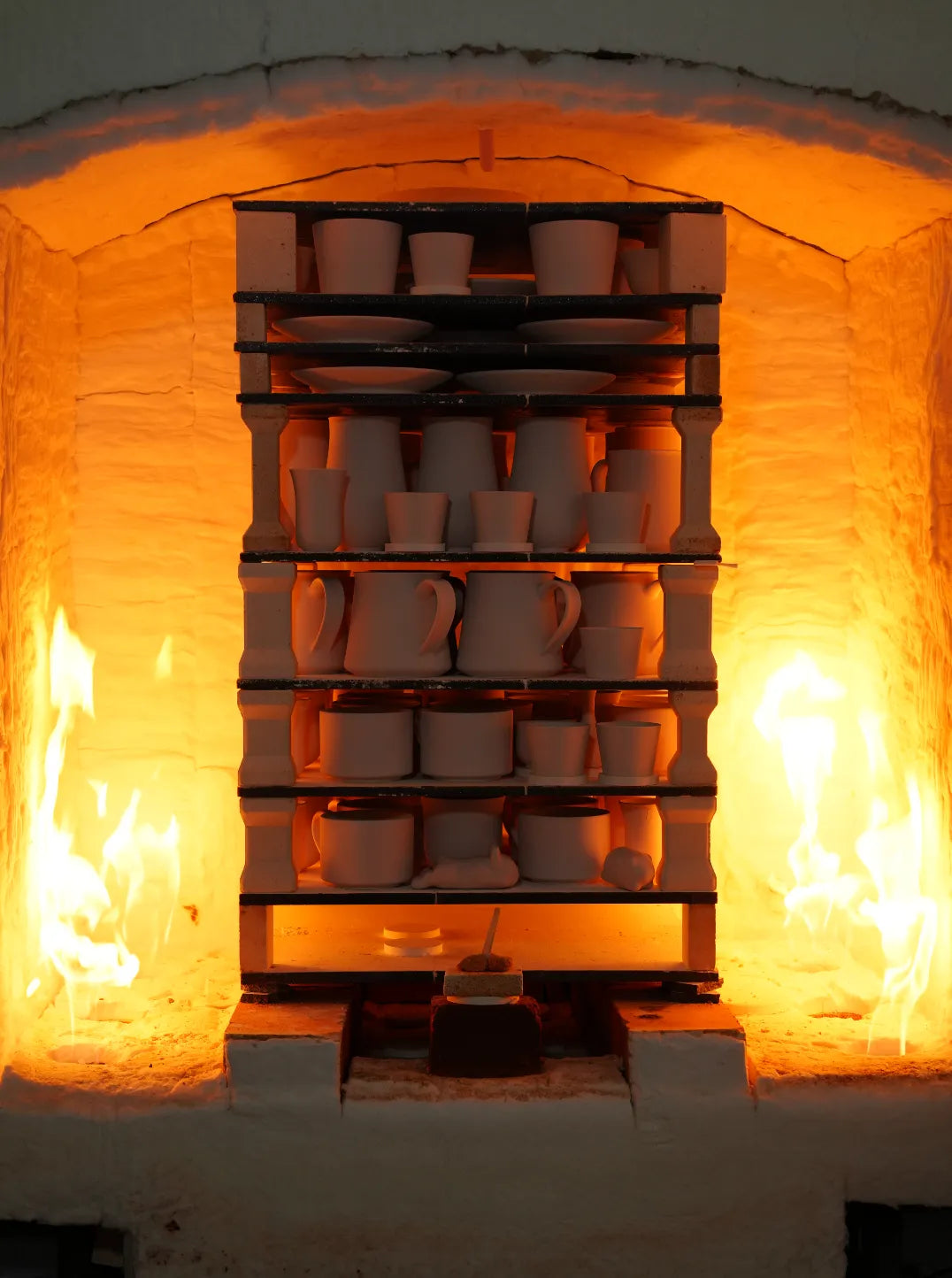
High firing
Glazed pieces loaded into the kiln. Heat rises—body sinters, glaze melts, color and gloss emerge. At 1300°C, clay becomes stone—dense, ringing, permanent.
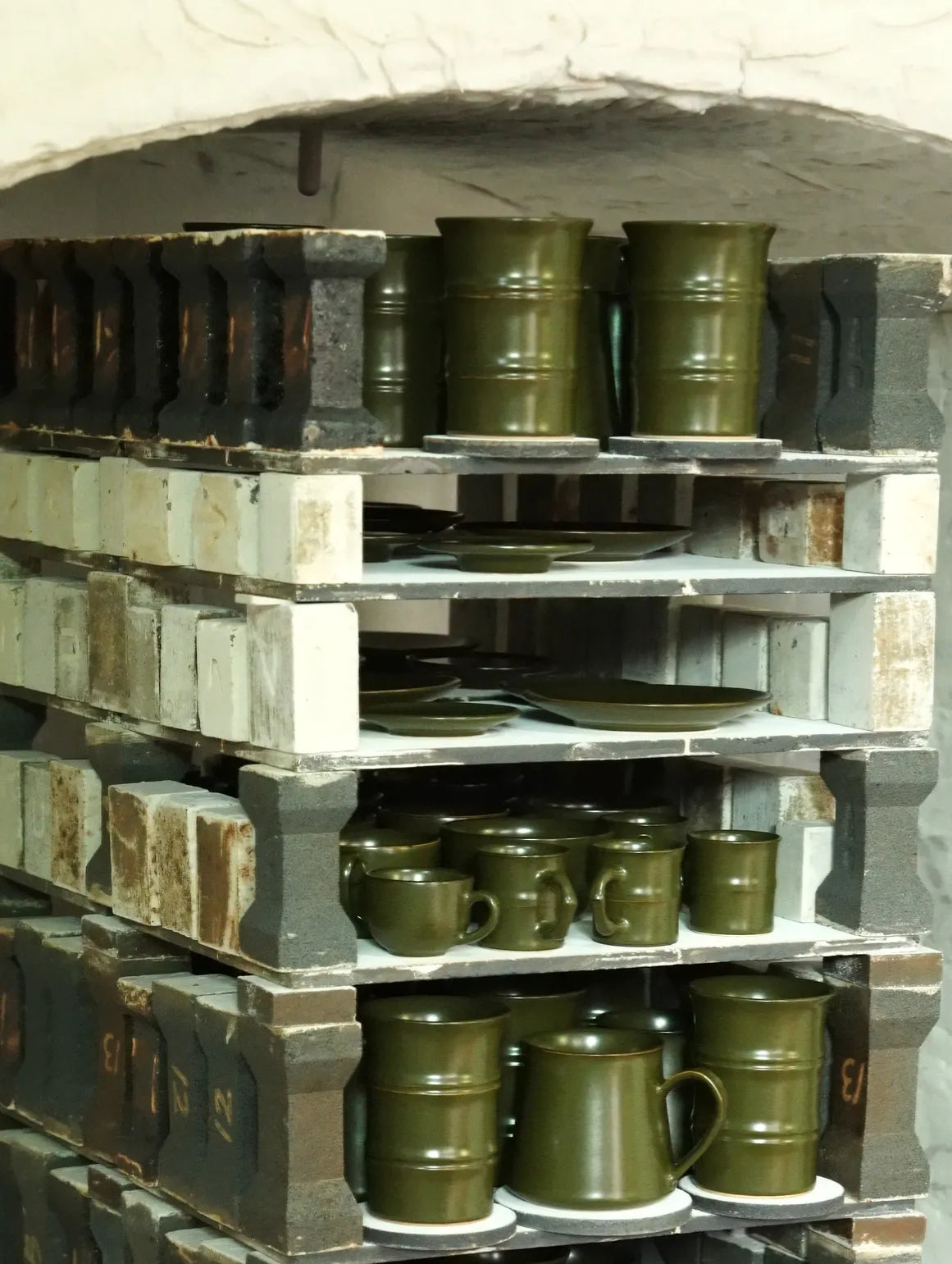
Kiln opening and sorting
Kiln cooled, then opened. Each piece checked—form, glaze, and finish. Then foot grinding, cleaning, and final touch.
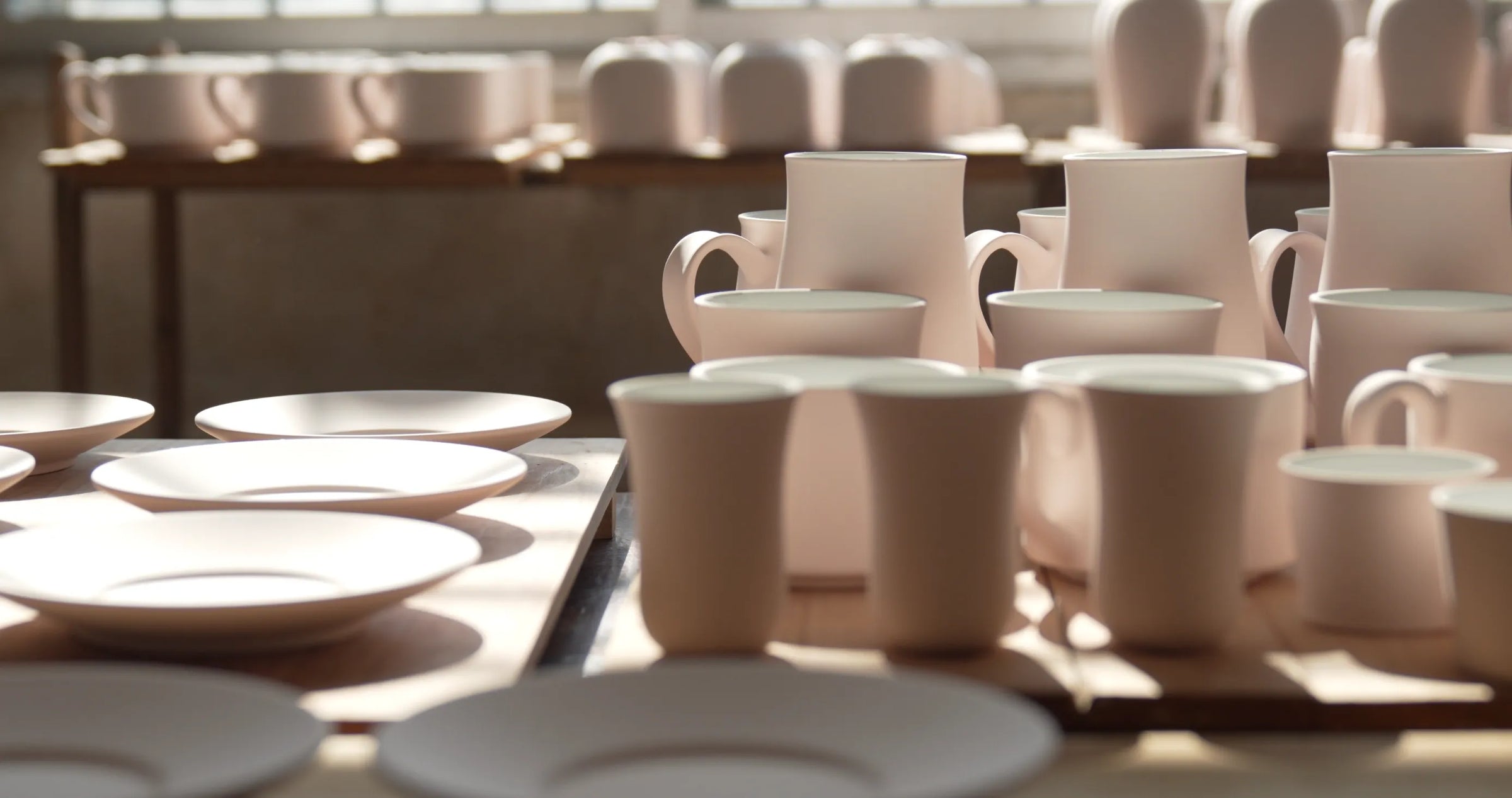
Every piece, touched by hand and heart.
Modern tools add consistency, but they don't replace the hand's judgment. Clay in the palm, the knife's touch, glaze's thickness, kiln's verdict—every piece tells of the maker's conversation with clay.